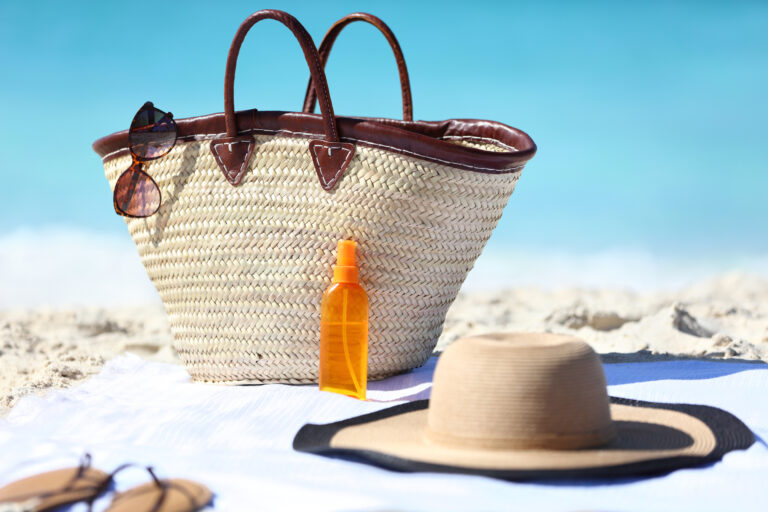

Best Beach Sunscreen of 2026 — Reef-Safe, SPF 50+, Sweat-Proof Picks That Actually Work

Most people either don’t use enough sunscreen, don’t reapply it, or grab whatever’s on sale without thinking about what’s actually in it. At the beach, that matters more than anywhere else — you’re getting UV reflection off water and sand on top of direct sun, often for five or six hours straight. This guide cuts through the marketing noise to tell you what actually works, what reef-safe really means, and which sunscreens hold up when you’re sweating and swimming.
We earn a small commission on purchases made through our links at no extra cost to you. We only recommend products we’d use ourselves.
What to Look for in a Beach Sunscreen
Before the product picks, a few things worth knowing:
SPF 50+ is the baseline for beach use. SPF 30 blocks about 97% of UVB rays; SPF 50 blocks about 98%. That 1% sounds small but adds up significantly over a full beach day. In bright sun with water and sand reflection, SPF 50 or higher is the smart call.
Broad spectrum matters. UVB causes burns; UVA causes aging and contributes to skin cancer. “Broad spectrum” on the label means both are covered. This is non-negotiable.
Water resistance ≠ waterproof. No sunscreen is waterproof. “Water resistant (80 minutes)” means it holds its SPF rating for 80 minutes of swimming or sweating — then you need to reapply. Most people forget this part. Set a timer.
Mineral vs chemical: Mineral sunscreens (zinc oxide, titanium dioxide) sit on top of skin and physically block UV rays. Chemical sunscreens absorb UV and convert it to heat. Mineral formulas tend to be better for sensitive skin and are the reef-safe choice. Chemical formulas are often lighter, less white-cast, and easier to apply under makeup or clothing. Both work — the best one is the one you’ll actually use and reapply.
What Does Reef-Safe Actually Mean?
Reef-safe has become a major marketing term, but there’s currently no federal regulatory standard for it in the US — meaning any brand can put it on a label. What it generally signals is that the formula doesn’t contain oxybenzone or octinoxate, the two chemical UV filters that Hawaii, the US Virgin Islands, and various other destinations have banned due to evidence of coral bleaching harm.
If reef protection matters to you — and if you’re swimming in a reef environment, it should — look for mineral sunscreens (zinc oxide, titanium dioxide) with non-nano particles. Non-nano means the particles are too large to be absorbed by coral. “Reef-safe” on its own without “mineral” or “non-nano zinc oxide” on the label is worth scrutinizing.
Best Beach Sunscreens of 2026
Best Overall: Sun Bum SPF 50 Original Sunscreen Lotion
Sun Bum has earned its beach-culture reputation honestly. The SPF 50 original lotion goes on smoothly, absorbs without a heavy or greasy feel, smells genuinely good (light coconut, not chemical), and — critically — holds up through swimming and sweating as well as any product in this price range. It’s vegan, cruelty-free, and fragrance options are broad. The formula is chemical-based (avobenzone, octisalate, octocrylene), so it’s not the reef-safe choice for reef environments, but for general beach use it’s our favorite everyday pick.
The 8 oz bottle is the right size to keep in your beach bag — big enough to actually last, not so large it’s cumbersome. Reapply every 80 minutes in water or every 2 hours on land.
SPF: 50 | Type: Chemical | Water resistant: 80 min
Best for: Everyday beach use, all skin types
Stars: ★★★★★
View Sun Bum SPF 50 on Amazon →
Best Reef-Safe: Raw Elements SPF 30 Certified Natural Sunscreen
Raw Elements is the gold standard for reef-safe sunscreen — genuinely, not just on a label. The formula is certified natural, uses non-nano zinc oxide at 23%, and is certified by the Protect Land + Sea certification program (the most rigorous reef-safety standard available). It’s also water resistant for 80 minutes, which is better than most mineral formulas. The tin packaging is plastic-free.
The trade-off: it applies white and takes a few minutes to rub in fully. This is inherent to zinc oxide formulas — it’s not a flaw, it’s how mineral sunscreen works. People with deeper skin tones sometimes prefer a tinted mineral option (see below). But the protection is exceptional, and for anyone snorkeling or diving around coral, this is the responsible choice.
SPF: 30 | Type: Mineral (non-nano zinc oxide) | Water resistant: 80 min
Best for: Reef environments, sensitive skin, eco-conscious buyers
Stars: ★★★★★
View Raw Elements SPF 30 on Amazon →
Best for Face: EltaMD UV Sport SPF 50
EltaMD is dermatologist-recommended for a reason — their formulations are clinical-grade without being clinical in feel. The UV Sport formula is designed for sweaty, active use: it’s oil-free, won’t run into your eyes, and dries to a non-greasy finish that works under sunglasses and hats. SPF 50 broad spectrum with transparent zinc oxide means no white cast. Water resistant for 80 minutes.
If your face burns faster than your body (common, due to more sun exposure and more delicate skin), having a dedicated face sunscreen is worth it. Don’t just swipe the same body lotion across your nose — your face deserves a product formulated for it.
SPF: 50 | Type: Mineral/chemical hybrid | Water resistant: 80 min
Best for: Face, active use, sensitive skin
Stars: ★★★★★
View EltaMD UV Sport SPF 50 on Amazon →
Best Spray: Neutrogena Beach Defense SPF 70 Water + Sun Protection Spray
Sprays divide sunscreen opinion, and they should — most sprays on the market are hard to apply evenly, which leads to missed patches and burns. Neutrogena Beach Defense avoids this with a continuous spray that delivers an even coat and actually absorbs rather than running off. SPF 70 is useful protection for fair-skinned people or high-UV destinations. The formula is helioplex-stabilized, which helps maintain efficacy as it absorbs UV over time.
Important spray tip: apply from 6 inches away, rub in immediately, and never spray in windy conditions or directly on your face (spray onto hands first, then apply). Sprays are particularly useful for kids’ backs and shoulders — the areas that get burned and missed most.
SPF: 70 | Type: Chemical spray | Water resistant: 80 min
Best for: Convenience, kids, reapplication on the go
Stars: ★★★★☆
View Neutrogena Beach Defense Spray SPF 70 on Amazon →
Best for Kids: Thinkbaby Safe Sunscreen SPF 50+
Children’s skin is more sensitive to both UV and to chemical absorption from skincare products. Thinkbaby uses a mineral-only formula (non-nano zinc oxide) that’s free from parabens, phthalates, PABA, and the chemical UV filters that raise concerns in pediatric health contexts. It’s water resistant for 80 minutes, goes on smoothly for a mineral formula, and is EWG-verified (Environmental Working Group’s strictest safety rating).
It’s also reef-safe, which makes it the right choice when kids are in the water. Apply generously — children need more than you think — and reapply religiously. Burns in childhood are one of the primary risk factors for melanoma later in life.
SPF: 50+ | Type: Mineral (non-nano zinc oxide) | Water resistant: 80 min
Best for: Children, babies, sensitive skin
Stars: ★★★★★
View Thinkbaby SPF 50+ on Amazon →
How Much Sunscreen to Actually Use
Most people use about 25–50% of the recommended amount, which means their effective SPF is far lower than the label suggests. The FDA recommends one ounce — about a shot glass full — to cover an adult body. For the face alone, about a nickel-sized amount. If your 8 oz bottle is lasting you three beach seasons, you’re not using enough.
Apply 15–30 minutes before sun exposure (chemical sunscreens need time to absorb; mineral sunscreens work immediately). Reapply every 2 hours, or every 80 minutes if swimming or sweating — sooner if you’re toweling off, which removes sunscreen regardless of water resistance. Don’t forget: ears, back of neck, tops of feet, and back of hands — consistently the most missed and burned spots.
The Sunscreen We Recommend for the Beach Bag
Our practical recommendation: carry two. A chemical SPF 50+ for easy, comfortable coverage on your body (Sun Bum or Neutrogena Beach Defense), and a mineral formula for your face and for use around reef areas (Raw Elements or EltaMD UV Sport). The combination covers every situation — convenience for the main application, responsibility for the environment, and clinical-grade protection where your skin needs it most.
See our full Beach Life packing guide for everything else that belongs in your beach bag, or visit the Beach Gear hub for more gear reviews.