How to Actually Have a Great Family Beach Day (A Parent’s Real Guide)

How to Actually Have a Great Family Beach Day (A Parent’s Real Guide)
The beach with kids can be magical. It can also be a full-day exercise in sunscreen arguments, sand in the sandwiches, and someone crying before noon. Here is what actually works — from parents who have done it many times and learned things the hard way.
The Golden Rule: Arrive Early, Leave Before the Meltdown
The single biggest mistake families make at the beach is arriving too late and staying too long. An 8am arrival gets you a parking spot, a prime umbrella location, and children who are still fresh. A 10am arrival gets you a hike from the overflow lot with forty pounds of gear while someone announces they need to go to the bathroom.
The other end of this equation: know your exit window. Most kids under eight hit a wall somewhere between 1pm and 2pm, compounded by heat, sun exposure, and low blood sugar. The beach day that ends on a high note is the one that ends before anyone falls apart. Pack up when things are still good. Everyone will want to come back next time.
The Gear You Actually Need (And What to Leave Home)
Non-negotiables
- A real beach umbrella — not a sun shade, not a pop-up canopy. A beach umbrella that can be tilted and angled to follow the sun. The BeachBUB system anchors properly in sand and does not become a projectile in wind.
- A quality cooler — one that actually holds temperature. Cold water, cold snacks. Heat exhaustion in children happens faster than you expect.
- More sunscreen than you think. One bottle is not enough for a full family on a full beach day. Bring two. Reapply every two hours and after every time anyone goes in the water. This is not optional.
- A beach wagon or cart. If you have a child under five, a beach wagon is life-changing. It carries the gear on the way in and the exhausted child on the way out.
- Rash guards for everyone. Better UV protection than sunscreen alone, and you do not have to reapply them. Kids who resist sunscreen will often accept a rashguard. Win-win.
Leave at Home
- Anything fragile or valuable. The beach claims things.
- Complicated, multi-step beach games nobody will actually set up.
- Good sandwiches on regular bread. They will be soggy by the time you eat them.
- The expectation that everyone will want to do the same thing at the same time.
Sun Safety: The Part Nobody Does Quite Right
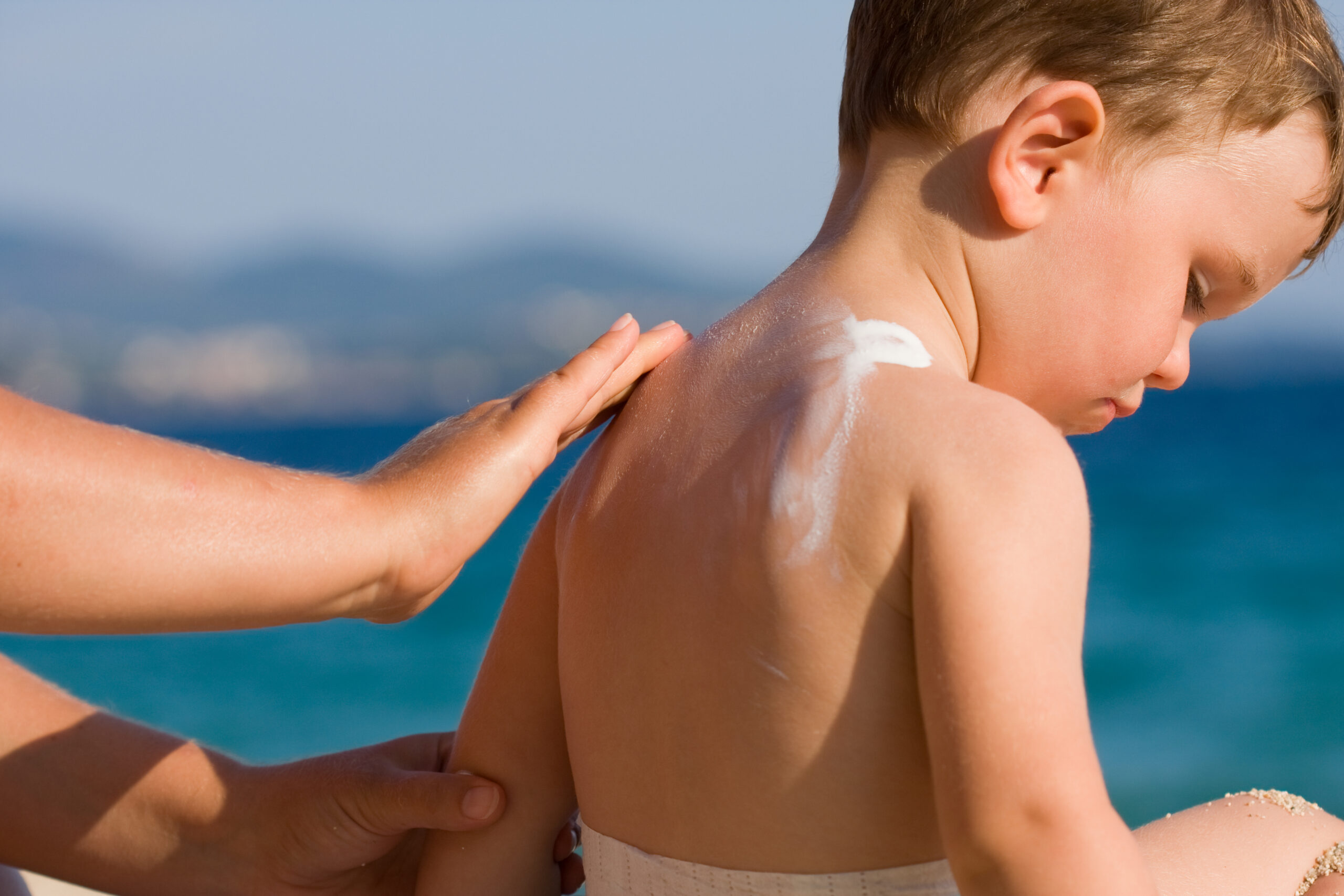
The American Academy of Dermatology recommends SPF 30 or higher, broad spectrum, water resistant, applied to all exposed skin 15 minutes before going outside and reapplied every two hours. In practice, most families apply sunscreen once, imperfectly, and then go in the water three times.
Apply before you leave the house or parking lot — not on the beach blanket with sand blowing around. Get every spot: the back of the neck, the tops of the feet, the ears. These are the spots that get burned because they seem unimportant.
The hat and UPF clothing combination is more protective than sunscreen alone, and doesn’t wash off. A wide-brim hat for kids dramatically reduces the risk of burned faces and scalps. Consider it mandatory gear, not optional.
Know the UV index before you go. Most weather apps show it. UV index 8 or above (common on clear summer beach days) means skin can burn in as few as 15 minutes for fair-skinned individuals. This is not alarmism — it’s useful information for planning your shade breaks.
What Kids Actually Want at the Beach (By Age)
Sand and water at the edge. That is genuinely it. A bucket and a small shovel. A shallow tidal pool if one exists. Do not fight the urge to carry them everywhere — they want to be where the action is. Keep them in shade as much as possible. This is the age where the beach is more for the parents.
Building things in the sand. Finding things in the sand. Burying things in the sand. Running at the waves and then running away. Jumping waves. This age is the golden beach age — genuinely, completely happy for hours with minimal intervention. Bring simple tools: buckets, shovels, a few molds. They will do the rest.
Body surfing, boogie boards, skim boards. Games that involve mild competition: frisbee, paddleball, spikeball. Digging the world’s largest hole, which is also a timeless classic. This age can handle longer beach days and usually decides independently when they need food or shade.
They want to be there on their own terms. The cardinal rule is not to over-organize their beach experience. Bring the gear, set up the umbrella, provide food and access to the water, then get out of the way. The beach is probably the single best environment for teenagers because there is genuinely nothing to do except relax. Let that happen.
The Food and Water Situation
Children at the beach need more water than they think they do. The combination of heat, sun, physical activity, and salt air means they are losing fluids rapidly without necessarily feeling thirsty. Make drinking water the default activity during every shade break. Aim for a cup of water per hour per child on a hot day.
For food: bring real snacks in real quantities. Watermelon wedges individually wrapped in plastic. Grapes in a sealed container. Cheese and crackers. String cheese. Frozen juice pouches (which double as ice packs and thaw into cold drinks). Avoid anything that melts, needs refrigeration, or will attract every seagull within a half mile.
The mistake is bringing too little food and assuming there will be a concession stand. There is usually a concession stand, but it is expensive and far away, and the line is a twenty-minute expedition during which someone will step on a shell.
The Sand Problem
Sand goes everywhere. This is the fundamental truth of family beach days and it cannot be defeated, only managed.
A spray bottle of water at the edge of your towel area is one of the best family beach tips nobody mentions. Rinse sandy hands before they touch food. Rinse feet before getting into the car. A small spray bottle weighs almost nothing.
Baby powder removes dry sand instantly. Dust it on sandy feet and rub gently — the sand falls right off. This has been a beach hack for decades and it still works perfectly.
Pack-out everything you bring. This includes food wrappers, bottle caps, and anything that blew under the blanket. Bring a dedicated trash bag. Beaches that feel clean are beaches where people do this. Be part of the reason the beach stays nice.
Safety in the Water
The beach is generally safe. It requires attention.
Always swim at beaches with lifeguards when you can. Check the flag system before anyone goes in — most US beaches use green (safe), yellow (caution), red (high surf/dangerous), and double red (beach closed). Take these seriously. A red flag means experienced adult swimmers are getting into trouble.
Teach children about rip currents early: if you feel a current pulling you away from shore, do not fight it by swimming straight back. Swim parallel to the shore until you are out of the current, then swim in. This is unintuitive but it is the correct technique and it saves lives.
Always tell your children: Never go in the water without a parent or responsible adult knowing. Always stay where the lifeguard can see you. If you are in trouble, wave your arms and shout.
The Mental Shift That Makes It Better
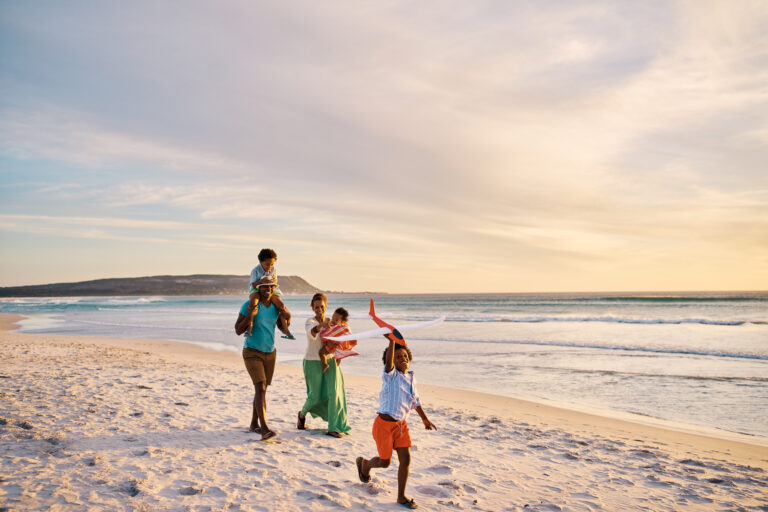
The beach days that become memories — the ones kids talk about years later — are almost never the perfectly organized ones. They are the days when someone discovered a tide pool full of crabs, or when the whole family got caught by a wave and thought it was hilarious, or when you stayed until the sun went pink and everyone ate cold grapes in the parking lot.
The goal of a family beach day is not to execute a perfect outing. It is to create conditions where something spontaneous and good can happen. Pack the gear, bring the food, set up the umbrella. Then put your phone away and go look at the ocean with your kids.
That part is free and requires no planning at all.