How to Find Uncrowded Beaches (Even in Peak Season)
How to Find Uncrowded Beaches
(Even in Peak Season)
The tricks that locals use — and most tourists never learn.
The best beach you’ll ever find usually isn’t on the first page of Google. It’s the one the tour buses can’t reach, the one you found by turning left when everyone else turned right, the one the Instagram crowd doesn’t know about yet. Finding it takes more strategy than luck — here’s exactly how to do it.
The Timing Tricks
1. Go Before 9am or After 4pm
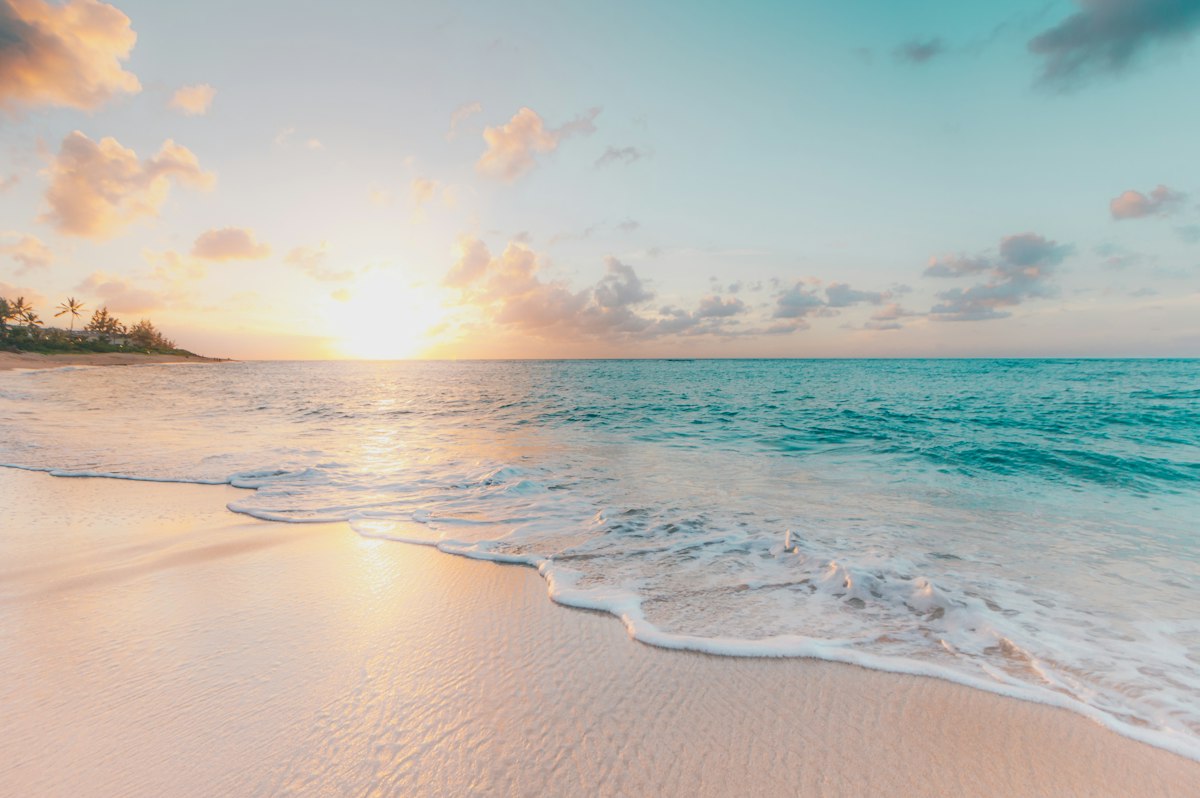
Most beach tourists arrive between 10am and 3pm. The same beach that’s packed at noon can be practically empty at 7:30am and again after 4:30pm. Early morning also gives you the best light for photos, the calmest water, and the most forgiving temperatures in summer. Golden hour before sunset is legitimately magical. Pack a blanket, a thermos, and don’t leave at 2pm like everyone else does.
2. Weekdays > Weekends, Always
Obvious, but worth stating: the same beach on a Tuesday versus a Saturday can feel like two different places. If you can shift your trip even slightly — arrive Sunday, leave Friday — you’ll hit the beach during the midweek lull. The worst day for crowded beaches is typically Saturday. The best is typically Tuesday or Wednesday.
3. Shoulder Season Is the Secret Weapon
One week before and after peak season is often the sweet spot: the weather is nearly identical, the prices drop noticeably, and the crowds thin significantly. For most Caribbean and Mediterranean destinations, this means late April/early May and late September/early October. For Florida and the US east coast, late September through October is glorious and often uncrowded.
The Location Tricks
4. Walk 10–15 Minutes from the Access Point
Most beach visitors walk as little as possible from the parking lot or beach entrance. Studies of beach usage patterns consistently show that crowd density drops dramatically 15+ minutes of walking from the main access point. Walk 10 minutes in either direction from the main crowd and see what happens. On long beaches, you can often find genuinely empty stretches by just walking past the lazy cluster of umbrellas near the entrance.
5. Look for Beaches Without Parking Lots
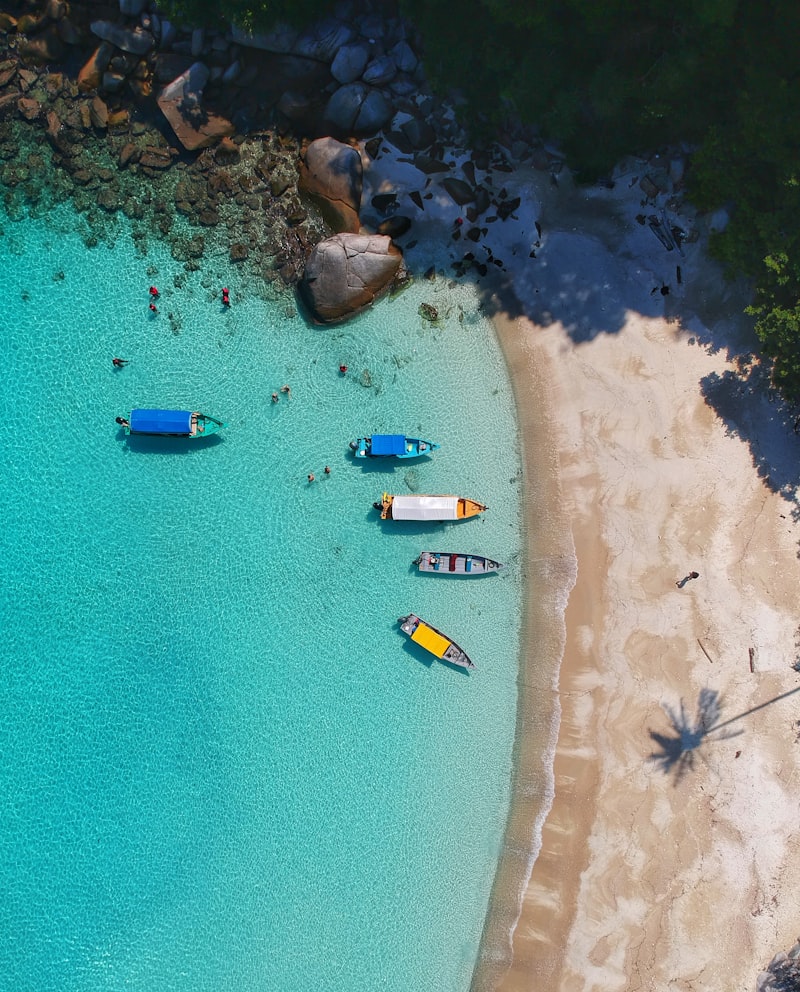
Parking access is the single biggest predictor of crowd levels. Beaches with large paved parking lots are going to be crowded. Beaches you have to walk to, take a short boat ride to, or access via a trail — these are the ones you’ll often have mostly to yourself. Use Google Maps satellite view to find beach access points with minimal parking near your destination. Local knowledge helps here: ask anyone working at a dive shop, surf rental, or local restaurant.
6. Avoid Any Beach with Its Own Instagram Hashtag
Search your destination on Instagram before you go. Any beach that shows up in hundreds of identical posed photos — the pink sand beach, the specific overwater bungalow view, the “famous” swing — is going to be swarming with people replicating the same shot. These places are not bad, they’re just crowded. If you want space, head somewhere that’s photogenic but hasn’t gone viral yet.
7. Use Google Maps’ “Nearby” + Satellite View
Zoom in on satellite view around your destination and look for beach-shaped coastline that doesn’t appear to have direct road access or well-known names. Then switch to Street View at any nearby roads and look for informal parking pullouts or beach access paths. Many of the best local beaches are literally just well-worn paths through coastal vegetation. Switching to “terrain” view also helps — look for beaches that are slightly elevated or around headlands from the main tourist area.
The Research Tricks
8. Ask at Dive Shops, Surf Rentals, and Local Bars
People who work in water-based businesses know every beach in the area and exactly which ones the tourists don’t find. Walk into a dive shop, rent a snorkel mask, and casually ask “where do the locals actually swim?” — you’ll almost always get a genuine recommendation that isn’t in any guidebook. The same works at surf rental shacks and any bar that looks like it’s been there for 30 years.
9. Look for Beaches in the “Less Convenient” Direction
Tourist gravity pulls visitors in predictable directions — toward the resort hotels, the promenade, the main strip. Everything “the other way” tends to be less developed. If the main tourist zone of your destination is north, go south. If everyone is on the Atlantic side, check what’s on the Gulf side. This isn’t foolproof, but directional contrarianism finds hidden beaches more often than you’d expect.
10. Check Beach Report Apps in the Other Direction
Apps like Surfline, BeachReports, and local Facebook groups will tell you crowd levels at major beaches. Use these not just to find good surf or water conditions — use them to find which beaches are described as “quiet today” and go there. Someone else’s “nothing happening here” is your “perfect empty beach day.”
The Honest Truth About Uncrowded Beaches
Most truly empty beaches require one of three things: walking effort, unusual timing, or going somewhere the mainstream tourism apparatus hasn’t fully optimized yet. The easiest path to a less crowded day is simply going early or going on a Tuesday. The highest-reward path is the one that takes a bit more work — a trail through the dunes, a boat ride, a recommendation from someone who actually lives there. Those beaches stick with you.
Also worth noting: some beaches are popular because they’re genuinely excellent. Don’t avoid iconic beaches entirely — just time them right and set expectations accordingly.