Thailand Beaches: The Complete Guide for 2026 — Krabi, Koh Lanta, Koh Tao and More
Thailand has been one of the world’s most visited beach destinations for 30 years — and it still delivers. The difference in 2026 is knowing which beaches have held up, which are overrun, and which hidden corners remain genuinely special. Here’s the honest guide.
The Two Coasts: What You Need to Know First
Thailand’s beach landscape splits between two coastlines with different weather, island characters, and optimal travel windows. The Gulf of Thailand (east coast) — Koh Samui, Koh Phangan, Koh Tao — peaks November through April. The Andaman Sea (west coast) — Phuket, Krabi, Koh Lanta, the Similan Islands — peaks November through April as well, but the Andaman gets significantly worse weather May through October. The two coasts share a season, which means most visitors visit both in a single trip heading roughly south to north or vice versa.
The good news: Thailand has so much coastline that even during high season there are quieter options. The islands we mention here are ranked roughly from most accessible/popular to most remote.
Krabi & Railay Beach — The Classic
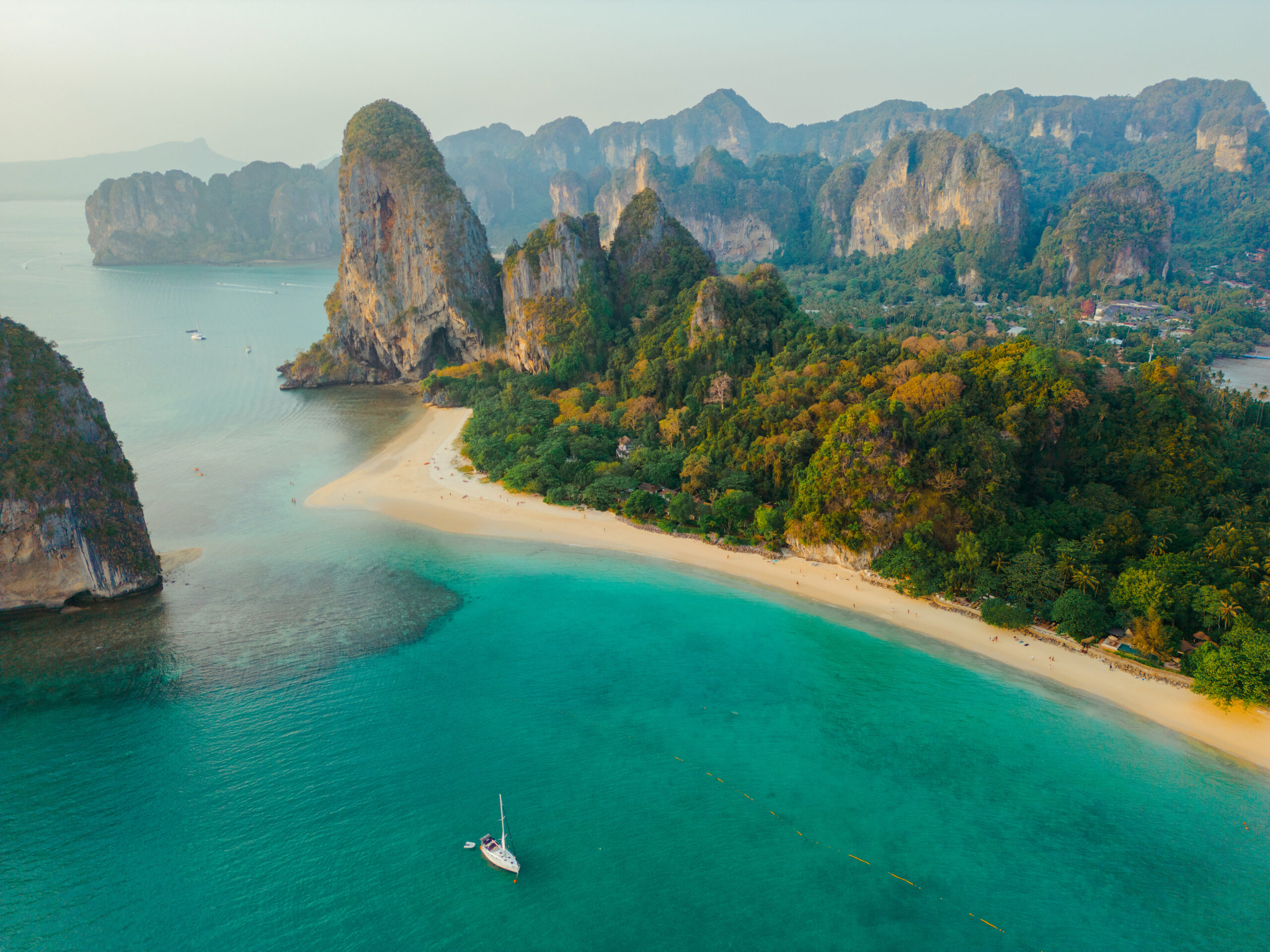
Railay Beach is one of the most dramatic beach settings in the world — towering limestone karsts rising from turquoise water, accessible only by longtail boat. It’s genuinely spectacular. It’s also busy. The way to experience it properly: stay on the Phra Nang or East Railay side, arrive before 10am when the day-trip boats start arriving, and walk around the peninsula at dawn when the light is extraordinary and you’ll have it nearly to yourself.
Krabi Town is 15 minutes by boat from Railay and makes an excellent budget base — good food, easy transport connections, and much lower prices than the beach resorts. Ao Nang beach itself is a solid mid-range option with lots of restaurant choices.
Koh Lanta — The Slow Lane
Koh Lanta is Krabi’s quieter, longer neighbour. Long Hat Beach (Hat Khlong Dao) has a gently shelving sandy bottom, calm water for swimming, and a relaxed beach-bar scene without the chaos of Koh Phi Phi. Klong Nin Beach on the west coast gets stunning sunsets. The south end of the island, toward Mu Ko Lanta National Park, is largely undeveloped — wild, forested, with empty beaches accessible by longtail or motorbike.
Koh Lanta is the ideal choice for families (calm water, safe swimming), couples who want atmosphere without crowds, and anyone who’s “been to Thailand before” and wants something with more texture.
Koh Phi Phi — Worth It or Not?
Let’s be honest: Koh Phi Phi (specifically Phi Phi Don, the inhabited island) has become overrun. The Famous Maya Bay — from The Beach — was closed for ecological rehabilitation for years and reopened in 2022 with strict visitor limits. Those limits have improved the bay significantly, but the boats still arrive in waves and the experience is managed rather than wild.
That said: the snorkeling and diving around the islands, particularly Phi Phi Leh and Bamboo Island, remains world-class. If you come for the water and the dive sites rather than the Instagram spots, Koh Phi Phi is still worth visiting. Stay on Phi Phi Don for one night, hire a longtail at dawn, and see it properly before the day-trip fleet arrives.
Koh Tao — The Dive Capital
Koh Tao on the Gulf side is where most people get their PADI certification. It’s the cheapest place in the world to do a full open-water course ($250–$350 including equipment rental) and the dive sites — Chumphon Pinnacle, Sail Rock, Southwest Pinnacle — are genuinely excellent for intermediate and advanced divers. Whale shark sightings are real from March through May.
Koh Tao’s beach scene is secondary to diving but Sairee Beach has a lively strip of restaurants and bars. For a quieter experience, the north and east sides of the island have small bays with excellent snorkeling accessible by longtail.
Koh Samui — The Comfortable Choice
Koh Samui has grown into a resort island with direct international flights, a strong infrastructure, and consistent quality. Chaweng Beach is the commercial center — long, wide, busy, great for families who want everything in reach. Bophut (Fisherman’s Village) has a boutique feel with a weekly walking street market. Lamai Beach is slightly quieter than Chaweng and very popular with Europeans.
Samui’s airport means you can fly direct from Singapore, Kuala Lumpur, Hong Kong, and other regional hubs — which makes it the easiest gateway for short stays in the Gulf islands.
The Similan Islands — Thailand’s Best Diving
The Similan Islands are a national marine park accessible by liveaboard dive boat or day trip from Khao Lak. The diving here — giant boulders covered in sea fans, whale sharks from November to April, manta rays, turtle cleaning stations — is some of the best in the Indian Ocean. The islands themselves are stunning: white sand, boulder-studded shoreline, clear water. Access is seasonal (the park closes June through October) and limited.
If diving is your primary reason for coming to Thailand, a 3–5 day Similan liveaboard is the single best thing you can do. Book several months in advance for high-season berths.
What Things Cost
Thailand remains one of the best-value beach destinations in the world, though “budget” has crept upward since 2019. Budget traveller on the islands: $40–$70/day. Mid-range (nice guesthouse or boutique hotel, two meals out, a few drinks): $100–$200/day. Luxury resorts: $300–$800+/night.
Transport is cheap: Bangkok to southern islands by train + ferry is $20–$40. Internal flights from Bangkok to Phuket/Krabi/Samui: $30–$100. Longtail boats for island day-trips: $15–$40 per person. Scooter rental: $5–$10/day.
When to Go
November through April is peak season on both coasts — warm, dry, clear water. December and January see the most visitors and highest prices. May through October is the wet season (particularly rough on the Andaman coast) — prices drop significantly and the quieter Gulf of Thailand islands are often fine during this period.
The sweet spots: late October through November (shoulder season — fewer visitors, the rains are easing, prices haven’t yet hit peak) and April through early May (still good weather, spring break crowds have left).
Getting There & Around
Fly into Bangkok (BKK/Suvarnabhumi or DMK/Don Mueang), Phuket (HKT), or Krabi (KBV) for the Andaman coast. For Gulf islands, fly into Koh Samui (USM) or take the overnight train from Bangkok to the southern ferry hubs. The overnight train to Surat Thani (for Koh Samui/Phangan/Tao) is comfortable, cheap, and one of the best travel experiences in Southeast Asia — book sleepers in advance.
Between islands, ferry is the standard. The Lomprayah and Seatran services are the most reliable. Don’t underestimate travel time between Gulf and Andaman islands — crossing the peninsula takes half a day by bus or a short flight.
The Honest Take
Thailand’s beaches have absorbed a lot of tourism without losing their essential quality. The famous spots are busy, but the infrastructure is good, the food is extraordinary at every price point, and the water — particularly on the Andaman coast — remains genuinely world-class. For first-time visitors to Southeast Asia, Thailand is still the easiest, most enjoyable, most rewarding starting point. For repeat visitors, the quieter islands — Koh Lanta, Koh Mak, Koh Kood — now offer the experience the famous islands used to.