Sri Lanka Beaches: The Complete Guide for 2026
ASIA · SRI LANKA
Sri Lanka Beaches: The Complete Guide for 2026
Surf on the west, diving on the east, whale watching year-round. Asia’s most underrated beach country.
Sri Lanka is the destination that keeps surprising people. An island roughly the size of Ireland packed with world-class surf, colonial beach towns, blue whale sightings, ancient temples within 30 minutes of the beach, and food that rivals anything in Southeast Asia — all at significantly lower prices than Bali or Thailand. Since the end of its civil conflict in 2009, tourism has rebuilt steadily, and the country has reached the sweet spot of being well-developed enough to be comfortable but not yet so crowded that it’s lost its character.
The Best Beaches in Sri Lanka
Mirissa — Best Overall (West Coast)
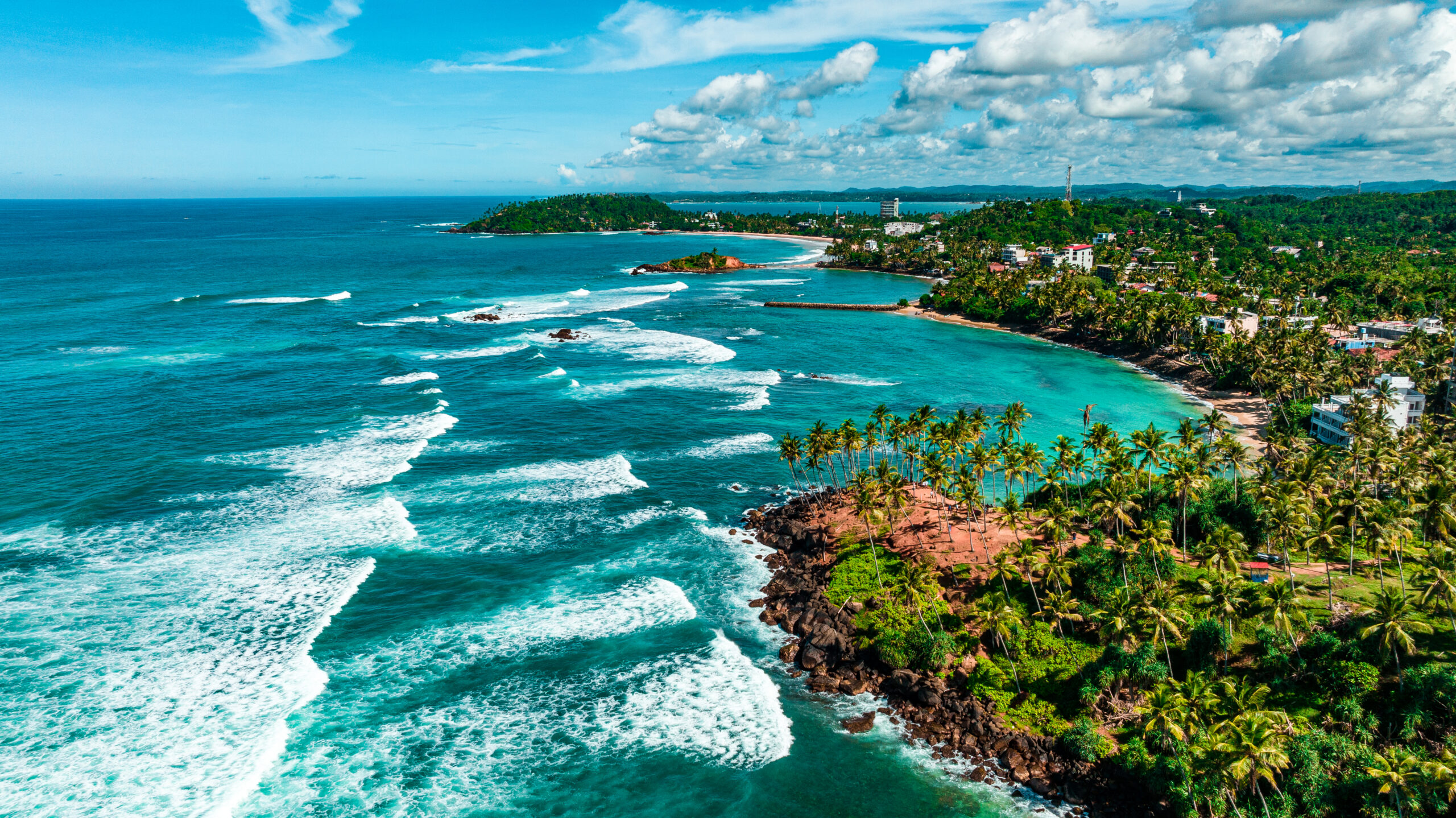
A small crescent bay lined with palm trees, genuinely good surf, and a beach bar scene that somehow never feels overwhelming. Mirissa is the most photographed beach in Sri Lanka for good reason — the combination of the palm-covered point, clear water, and the offshore Parrot Rock make it visually exceptional. Blue and sperm whale watching departs from Mirissa harbor December through April, when whale sightings are among the most reliable in the world. Don’t miss the whale watching — it’s legitimately extraordinary.
Arugam Bay — Best for Surf (East Coast)
A-Bay is one of the top 10 surf spots in the world according to most surf publications, and it earned that ranking legitimately. The main point break works for experienced surfers at 4–8ft; multiple other breaks nearby accommodate beginners. The town has the easy, sleepy feel that good surf towns develop — simple guesthouses, excellent rice and curry, hammocks everywhere, nobody in a hurry. Sri Lanka’s east coast is untouched compared to the west; the drive from Colombo (9–10 hours) or a domestic flight to Ampara keeps it from being overrun.
Unawatuna — Best for Swimming
The horseshoe bay at Unawatuna near Galle has calm, protected water that’s ideal for non-surfers who want a comfortable swim. The town has the highest concentration of restaurants, guesthouses, and dive shops on the south coast. It’s busier than Mirissa but has better facilities and a wider range of accommodation. The Dutch fort at Galle (15 minutes away by tuk-tuk) is a UNESCO World Heritage site and worth the visit — colonial streets, boutique shops, excellent cafés inside a still-functioning fortified city.
Trincomalee — Best Diving (East Coast)
Trinco, as it’s known locally, has one of the world’s finest natural harbors and some of Sri Lanka’s best diving conditions. Pigeon Island National Marine Park just offshore has excellent coral reef and juvenile blacktip reef sharks. The famous hot springs at Kanniya are nearby. Trincomalee is a proper city rather than a beach village, which means better infrastructure but less of a “beach town” feel. Best visited as part of an east coast circuit with Arugam Bay.
Tangalle — Most Remote & Beautiful
Further east along the south coast than most tourists go, Tangalle has some of Sri Lanka’s widest, emptiest beaches. The swimming is limited by rough surf at the main beach, but the more sheltered beaches to the east are swimmable and pristine. Sea turtle nesting happens here November through January. Accommodation is mostly boutique guesthouses. This is where you go when you want to disappear for a week.
Two Coastlines, Two Seasons
Best: November–April
Mirissa, Unawatuna, Tangalle, Hikkaduwa. Calm seas, good weather, whale watching season. Peak tourist season — book ahead.
Best: May–September
Arugam Bay, Trincomalee, Pasikudah. Surf season peaks June–August. East coast is dry while west has its monsoon.
Getting to Sri Lanka
Bandaranaike International Airport (CMB) at Colombo is the main entry point, with direct or one-stop connections from most major cities. SriLankan Airlines, Qatar Airways, Emirates, and Singapore Airlines all serve Colombo. From the UK and Europe, flight times are 10–12 hours with a stop. From Australia, routing through Singapore or Kuala Lumpur is 9–11 hours total.
Getting around Sri Lanka: tuk-tuks for local transport, trains for the famous scenic rail routes (book ahead for the Kandy-Ella route — it’s spectacular), buses for budget intercity travel. The A2 coastal highway runs the south coast reasonably well. Domestic flights connect Colombo to Jaffna and Mattala (for the east coast) but service is limited.
What to Do Beyond the Beach
Sri Lanka is exceptional for combining beach time with cultural and wildlife experiences. Yala National Park — one of the highest leopard densities in the world — is a 2-hour drive from the south coast. Sigiriya Rock Fortress (another UNESCO site, an ancient palace atop a volcanic rock plug) is doable as a day trip from the Cultural Triangle if you’re combining coasts. The train journey from Kandy to Ella through tea country is one of the world’s great scenic rail rides. Budget at least 2 weeks to scratch the surface properly.
Practical Info for 2026
Gear to Pack for Sri Lanka
This guide contains affiliate links. We may earn a small commission if you book through our links at no extra cost to you.