How to Have the Perfect Beach Day with Kids

How to Have the Perfect Beach Day with Kids
Great beach days with kids don’t just happen — they’re set up the night before, timed right, and saved by the three things you almost forgot to pack. Here’s the full playbook.
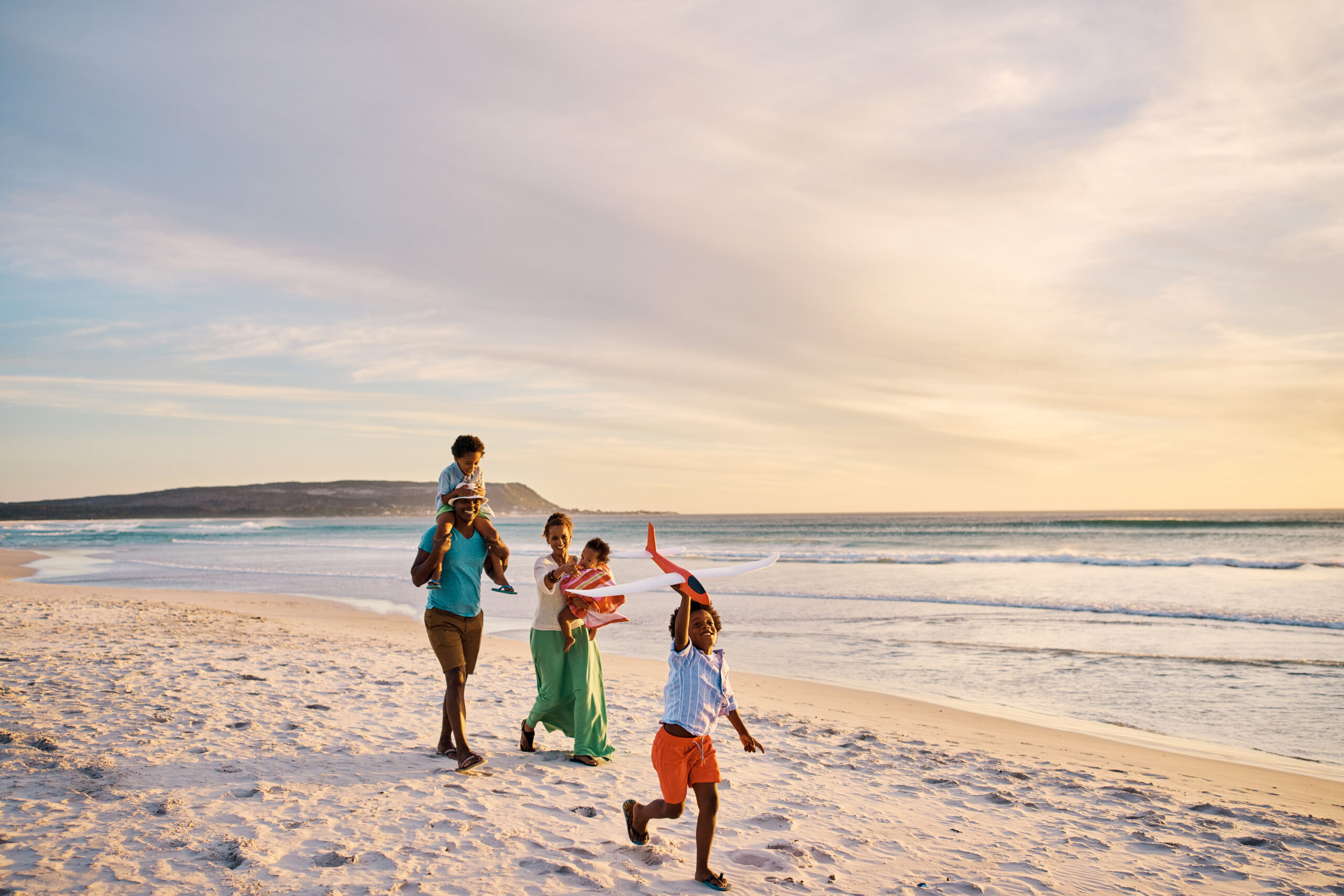
A beach day with kids has two possible versions. The first involves sunburned shoulders, a toddler eating sand, a panicked rummage through a bag for the sunscreen you forgot, and everyone exhausted and grumpy by 1pm. The second version — which is just as achievable — involves a genuinely great day where the kids run themselves happily ragged, you actually get to sit down, and everyone drives home sandy, salty, and satisfied.
The difference is almost entirely in the preparation. Here’s what actually works.
⏰ Timing Is Everything — Arrive Early
The best beach time with young kids is 8:30–11:30am. The sun is at a lower angle, the UV index is manageable (it peaks between 11am and 2pm), the sand is cooler to walk on, and the beach itself is quiet. You’ll get your pick of spots, no jostling for shade, and kids who are still in their morning energy window rather than their pre-nap meltdown zone.
Plan to leave around midday or just after — before the hottest part of the day, before the afternoon crowds, and ideally with a sleepy child strapped into the car seat before you’ve even pulled out of the parking lot.
The golden rule: Never be still on the beach between 11am and 3pm with young children. Either you’re in the shade, in the water, or it’s time to go home.
☀️ Sun Protection — The Part Most Parents Under-Do
Standard sunscreen application for kids takes about 20 minutes to properly absorb before it works — which means you apply it before you leave the house, not when you’re standing on the beach about to let them run into the water. Apply a full coverage coat at home, then reapply on arrival and every 90 minutes after water exposure.
For young children, a full-coverage UPF 50+ rashguard and swim hat removes about 90% of the sunscreen anxiety entirely. The Coolibar and UV Skinz brands are excellent — they’re lightweight, dry quickly, and most kids forget they’re wearing them within five minutes. Save the open-shoulder swimwear for evenings.
- SPF 50+ mineral sunscreen for faces and any exposed skin
- UPF 50+ rashguard — short or long sleeve depending on child’s skin
- Wide-brim sun hat that stays on (look for chin strap)
- UV-blocking sunglasses — kids’ eyes are more vulnerable than adults’
🎒 What to Actually Pack
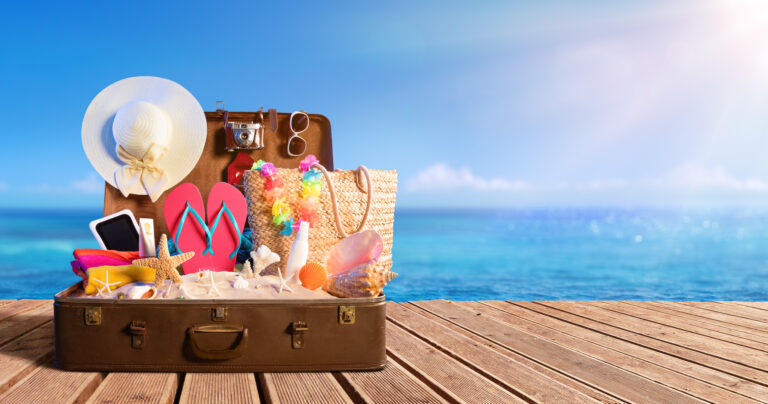
Most beach bags with kids are overpacked in the wrong places and underpacked in the right ones. Here’s the optimised list after many beach days of trial and error:
The non-negotiables:
- Sunscreen SPF 50+ × 2 (one gets lost)
- Rashguards + swim hats for each child
- Change of dry clothes per child (kept in a dry bag)
- Towel per person — kids need their own, they will not share
- Snacks that survive heat: grapes, cheese sticks, crackers, fruit pouches
- More water than you think — 500ml per person per hour in hot weather
- Small pop-up shade tent or beach umbrella — more essential than any toy
The upgrades that make a real difference:
- A proper beach wagon (Mac Sports or similar) to haul everything in one trip — game-changing with multiple kids
- Mesh sand bags that let the sand fall through when you pick them up
- Small portable cooler with ice packs — frozen grapes at 11am is a parent superpower
- Sand-free beach mat (Poketo or CGear) — reduces the sand-in-everything problem by about 80%
Leave at home:
- Inflatables (they drift, they pop, they cause arguments)
- Glass containers or glass sunglasses
- Anything that will be genuinely heartbreaking if lost to the sea
🌊 Water Safety for Kids
This matters more than any gear recommendation. Before you let kids in the water at any beach:
Check for flags. Red flag = no swimming. Yellow flag = caution, stay close. Green flag = generally safe. No flag system? Ask a lifeguard or local before anyone gets in.
Understand rip currents. A rip is a fast-moving channel of water flowing away from shore — it’s how most drownings happen, and it’s not about getting pulled under, it’s about getting pulled out. The water in a rip current often looks slightly darker, flatter, or foamy compared to the waves on either side. If you can’t see a clear difference in the water, pick a beach with lifeguards.
Body position in waves. Teach kids to face incoming waves and never turn their back on the ocean. Small children should hold an adult’s hand at all times in water above the knee. A simple rule: if a wave knocks you over, you’re in too deep.
Ages 0–4: Shallow splash zone only — ankle to knee depth, constant adult contact. Ages 5–8: Up to waist depth with adult within arm’s reach. Ages 9+: Can swim in designated areas with clear sightlines from shore.
🏖️ Keep Them Entertained (Without Screens)
Kids who are bored at the beach are kids who want to go home. The solution isn’t more toys — it’s activities that have genuine grip. Here’s what actually works:
Sand building: A small set of castle moulds and a single bucket is all you need. Show them how to make a moat and fill it with water — kids aged 3–10 will do this for an hour without prompting.
Rock pooling: Find a rocky section of beach at low tide and let them explore with a net and a bucket of water. Crabs, starfish, and small fish make for genuinely engaged scientific exploration. Teach catch-and-release from the start.
Boogie boarding: A basic foam boogie board is the best beach toy investment you can make for kids aged 5+. It transforms the water from scary to thrilling. Lie them flat on it, let small waves push them to shore — most kids are obsessed within ten minutes.
Beach scavenger hunt: Write a list before you leave: find a smooth white stone, a piece of sea glass, a shell with a hole in it, a feather, something green. Kids aged 4–9 love it. Takes five minutes to set up and 45 minutes for them to complete.
🍉 Food Strategy
Don’t rely on beachside food vendors for your main nutrition plan — they’re unreliable, expensive, and kids are impossible to negotiate with when they’re hungry. Pack your own food, make it better than the vendor food, and use it as a reward mechanism.
Best beach foods for kids: watermelon slices in a sealed container (they stay cold and hydrate simultaneously), peanut butter and banana sandwiches wrapped tightly in foil, cherry tomatoes, cheese cubes, and the parent crowd-pleaser — frozen grapes in an insulated bag. They’re sweet, cold, and take ages to eat.
Hot days genuinely suppress appetite. Don’t push food; push water. Kids drink far less than they need at the beach and mild dehydration is the real reason most under-6s have their meltdown by midday.
🔁 The End-of-Day Routine
A proper pack-down at the beach saves 20 minutes of misery at home. Before you leave: shake out towels, change kids into dry clothes at the beach (it’s much easier), rinse feet with a water bottle kept specifically for this purpose, and do one sweep of the area for left items. A fresh set of clothes in a dry bag — ready to put on rather than dig for — makes the transition from beach to car instantly better.
Rinse swimwear in fresh water as soon as you get home. Saltwater left in neoprene or synthetic fabric for 24 hours degrades it fast.
The BeachyThings Bottom Line
The best beach days with kids are the ones that end before anyone melts down, start before the sun gets savage, and have enough structure that the kids feel organised but enough freedom that they feel like they’re running wild. Get the timing, sun protection and snacks right — the rest mostly takes care of itself.